We began our
journey south to Tataouine before sunrise and our first stop was to pick up Dr.
Emna Brour on the way. Tricia was still a little weak from the flu and coughing a lot but determined to keep going; Jaber was full of energy and ready for a long day of driving; Emna graciously sat in the bumpy back seat and kept Jaber deep in conversation. This eight
hour drive had many examples of the importance of livestock, agriculture and donkeys to the livelihoods of Tunisians - in the present and the past.
The view for our road trip was hundreds of olive tree orchards dotted with people, sheep, dogs, cattle and
donkeys. On the road we saw all manner of things being transported – sheep and
horses in various sized trucks; chickens, eggs, peppers, tomatoes, and
onions tied down in crates; solar panels, bricks and lumber stacked on larger
truck beds; men and women in the back of smaller pickup trucks. Alongside the
fast moving trucks, people were riding on motorbikes and bicycles (sometimes in the opposite direction of traffic along the fast lane).

The
roadside was dotted with entrepreneurial ventures - many of which were
very new sights for Tricia. We passed by barbeque eateries with live
sheep and hanging carcasses; young camels waiting to be slaughtered;
stands with fresh fruits, pottery and baskets; single tables selling
bags of nuts and fruits as well as cups of tea.

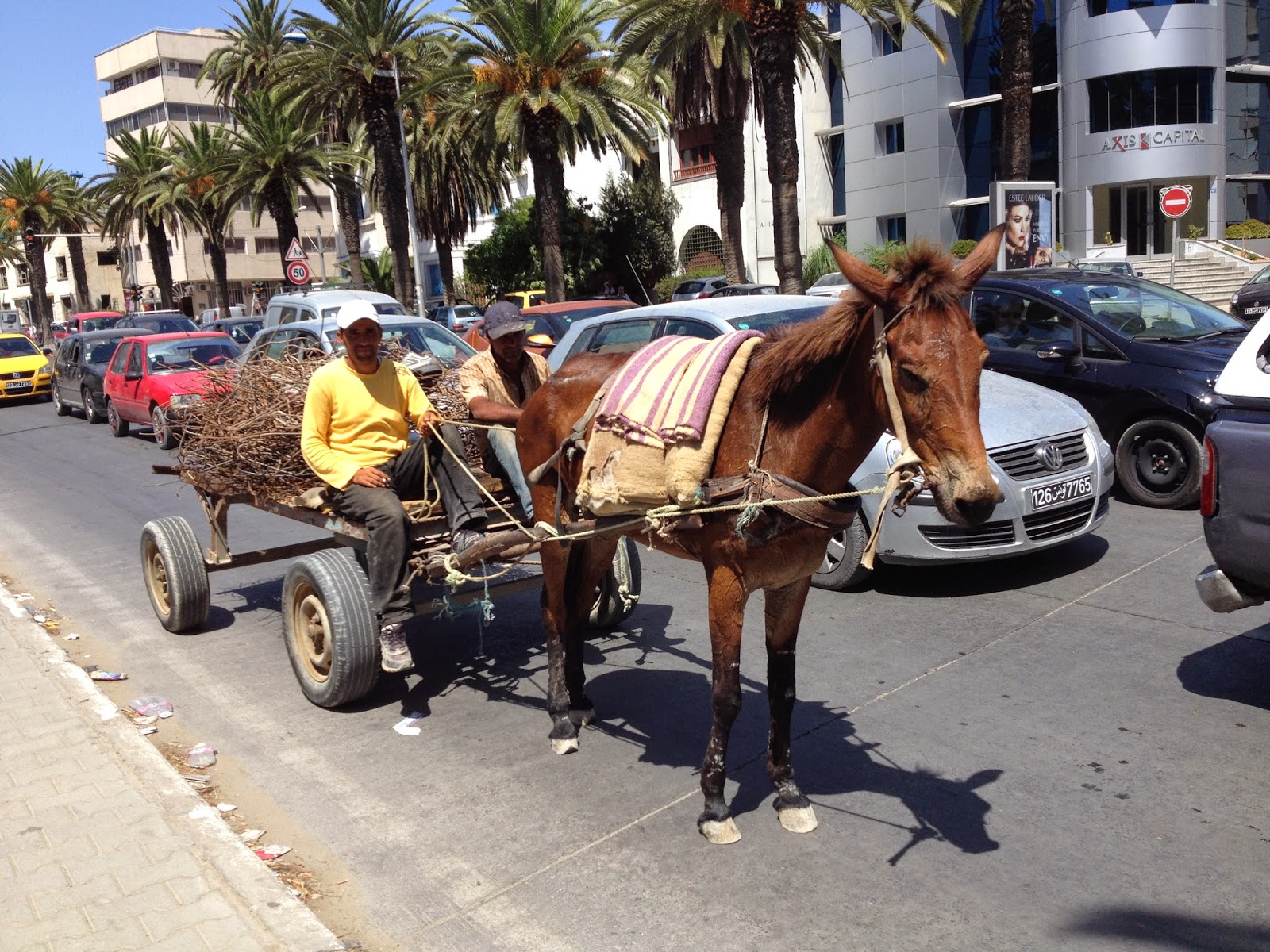
And of course we saw lots of donkeys...tethered, loose, pulling carts, alone, with men, women and sheep...in the fields and in the city.

After about four hours we got closer to Medenine, the sun was out in full force and we were grateful for the truck's air conditioning. The landscape shifted from olive trees in gravel fields to date palm trees in sandy desert; we saw more camels. The roadside businesses were predominately fuel vendors selling 5 gallon containers of gasoline brought over the border illegally from Libya. Inside the busy city of Medenine we saw several old donkeys hauling carts driven by old men - both looked lean and active and too busy to pose for a picture.

We met Dr. Ahlem Lahmar in the center of Tataouine and had a quick meal (Tricia was really hungry after three days of illness and took her chances eating in a restaurant) before finding our accommodations for the night in nearby Chenini.
 | |||
| Tataouine |
 |
| Desert landscape on the way to Chenini |
Chenini is a small village which looks like a picture straight from a history book and some of the buildings date back to the 12th century. The modest hotel was in one section of this mountain ksar village of 'castles' which was carefully renovated by a local dentist (who speaks great english). He was very proud of his accomplishment and rightly so, because the authenticity was preserved while creating modern comforts. He was thrilled to hear we came to the area to work on donkey teeth since he has two donkeys. When he arrived here 10 years ago he rented donkeys for 10 dinars a day, until after four days he realized he could buy a donkey for 40 dinars. He currently uses his grey donkey to carry visitors' luggage to the rooms in baskets balanced over the donkey's back.
 | |
| Chenini |
We got a full tour and history lesson and he explained how the village was built by donkeys. "Everything you see - it was built by donkeys...and the path we walk, it was chosen by the donkeys." He said everyone in the village has a donkey. He walked us up the hill to the nicest room, complete with air conditioning, a television and nearby wind up phone to call the main desk.


We ended the hotel tour by making a plan to take care of his donkeys and any others in the village before we check out.
We ended the hotel tour by making a plan to take care of his donkeys and any others in the village before we check out.

 | |
| the working donkeys of Chenini |