Donkey and people

Donkey and people
Here we are in Tunisia! Dr Jaber Belkhiria and Dr Tricia Andrade were awarded a University of California at Davis Blum Center Poverty Alleviation through Sustainable Solutions graduate student grant. We will be here for a month to assess the role of Tunisian donkeys in development.
Showing posts with label human-animal bond. Show all posts

Friday, September 26, 2014

Local faces of Mashreq Shams, Kasserine

A description of our day in Mashreq Shams would not be complete without showcasing some of the people we met. These beautiful faces reflect the history and tenacity of the region in a backdrop of many challenges and political uncertainty.

The faces were a reminder to Tricia, the 'sheltered and not very well traveled ' American, that people find purpose and joy within their own cultural context. There are commonalities that all humans have. Parents love their children; kids crave connections and love to laugh; women gather together to share; husbands and wives have their private conversations; and strangers are curious about each other. As veterinarians, we notice animals can often be found as a delicate thread weaving these relationships together.

The pictures from our iphones and GoPro screen shots may not make the cover of National Geographic. Nonetheless, we think when you look at these photos, you will appreciate what we experienced in person. (click on the photo for fuller screen view)


Wednesday, September 17, 2014

Meeting some very special working equines

At the end of last week we spontaneously stopped at the Ferme Therapeutique Pour Handicapes (Therapeutic Farm for the Handicapped) (www.fth.org.tn/) in Sidi Thabet. We were greeted by the animal handler (a former jockey) who told us about the school and gave us an informal tour of part of the 7 hectare facility.
 http://www.fth.org.tn/
The mission of the farm is to ensure the well-being of individuals with disabilities by providing care, therapy and agricultural training. The farm believes in the untapped potential of its students and encourages their autonomy and integration into Tunisia's economic and social life.
A Youth, A Handicap, A Future   http://www.fth.org.tn/
A multidisciplinary team (psychologist, speech therapist, educators, sports teacher, animal caretakers) oversees the youth in many activities including art, cooking, horticulture, rabbit breeding, animal care, and making cheese and yogurt. 

Agricultural activities, including "zoothérapie" (pet therapy), seem to be at the center of the therapy process.  The animals calm the youth during therapeutic sessions allowing the students better focus. This animal assisted therapy promotes physical and psychological development. 

a student learns to groom a horse    photo http://www.fth.org.tn/
Our tour included meeting a few of the equines who help with the therapy. We met a very sweet chestnut mare (probably the same one in the website photo from above) who had a swollen eye and was expecting a visit from the veterinarian later in the day. In the usual "while you're here, doc" mode, Tricia took a moment to happily give her opinion and suggestions (animal caretakers have a reputation for providing vets with endless cases to look at).
signs point our way to the barns

Tricia unofficially checks a mare's swollen eye
There was a lovely paddock for the horses, an outdoor and indoor riding arena and a very clean tack room with helmets, saddles and grooming supplies.  Tricia was especially impressed by the well organized tack room maintained by our tour guide, who obviously has a passion for quality horsemanship.
A neat row of helmets and boots awaits the students

The farm also has donkeys which are used particularly for students who require smaller equines. They are especially helpful for individuals in wheelchairs.
photo http://www.fth.org.tn/

Our guide introduced us to one of the farm's "equine employees"
We were also shown some of the horticulture areas which include herb gardens, green houses and tables for potted cactus arrangement production.

Our guides picks mint for Tricia who commented this was one of the nicest facilities she has seen in Tunisia
We don't know if we will have time to return for a visit with the director, but Ferme Therapeutique Pour Handicapes is certainly an organization we would like to know more about. We were very pleased to meet some very special working equines and hope more of Tunisia's donkeys and horses can find similar employment.
We encourage our readers to check out their website (www.fth.org.tn/). Even if you don't speak French, you will see the photos tell the story of an excellent approach to a very worthy cause.

Here's another hint to who the foot in previous post belonged to. Click on the comment section below to see the answer.
a unique skeleton at Sidi Thabet Veterinary School anatomy lab
 

Monday, August 25, 2014

Patience and persistence pays off


Today we had to head into central Tunis for meetings. It was a slow start amidst lots of traffic and we were driving around in circles as several arranged meetings got canceled and rescheduled. Patience and persistence triumphed.


Jaber put his cellphone networking and multitasking skills to good use and we were able to make our meeting with Malek Lakhwa a priority. We were hoping he would be a key community partner for our project because he has participated in donkey veterinary service events, owns an olive oil farm, and is an entrepreneur as well as a medical doctor.


We were not disappointed in our meeting. Malek listened carefully to what we wanted to do and offered his farm and community connections. Malek was full of information about the status of donkeys in general in Tunisia and local craftsmen who make harness equipment. He told us about his volunteer efforts with NGOs and the attitudes of local residents towards their donkeys, where many place little value on the donkeys. The owners use the donkeys mostly for transportation and don't understand their behavior which results in rough treatment. We talked about addressing human behavior changes and hope in school age children. He shared his concerns about the increase of donkeys being butchered for meat and the poor conditions of their transport and quality control of the meat. 

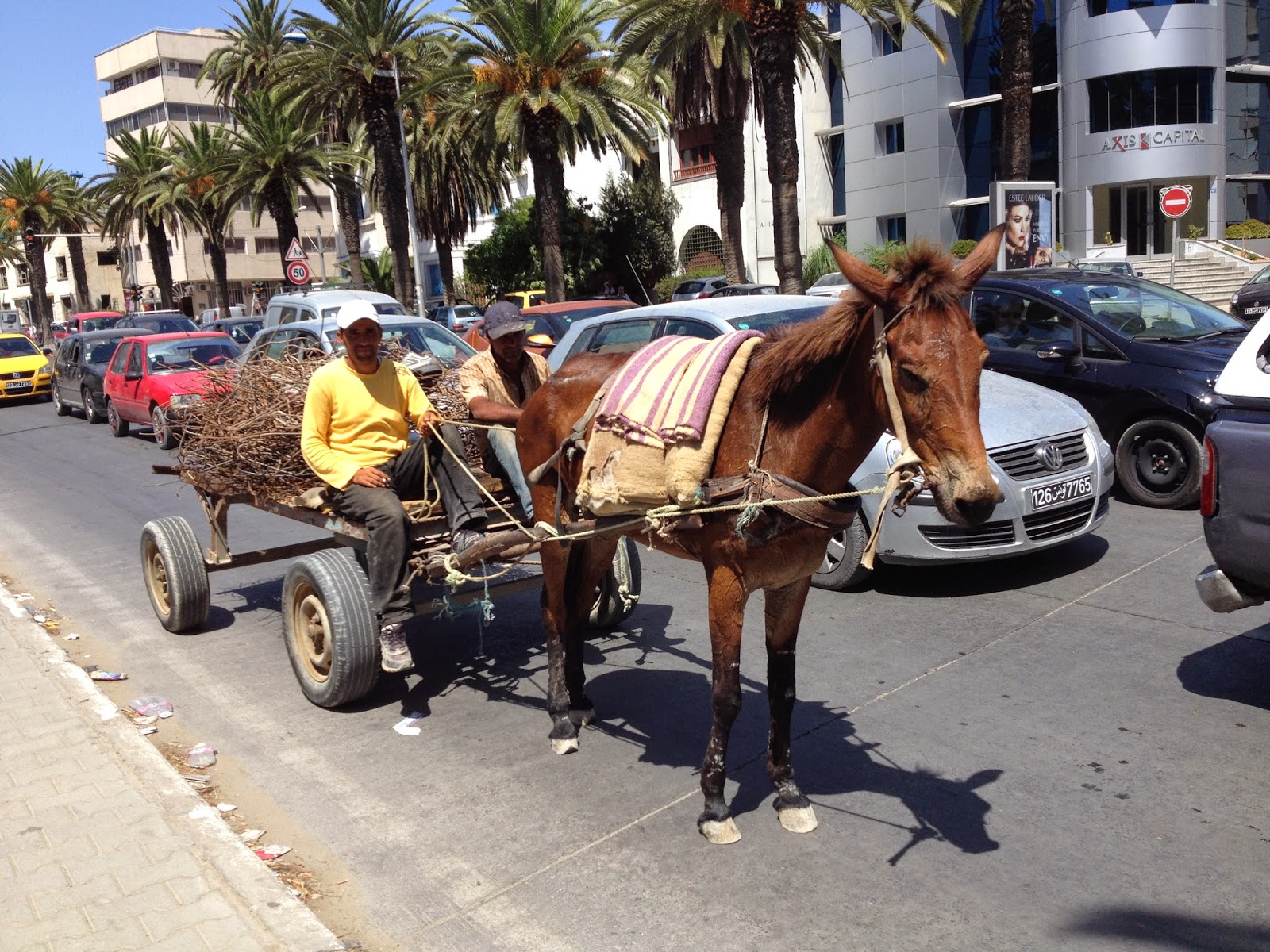
Just as we were talking about the welfare of donkeys, a cart went by with a thin mule who looked very stressed and had sores on his mouth and squinting runny eyes. The drivers were friendly and told Tricia to pet the mule. It was hard to walk away and not give advice or treatment.


Malek is very fond of the four donkeys he owns and is keen to improve the health of donkeys in Tunisia. It was inspiring to hear about his entrepreneurial adventures of making soap from donkey's milk (he is the only person his donkey, Cleopatra, will allow to milk her). We also began brainstorming about marketing the soap and agri-eco tourism ideas involving donkeys. Anyone interested in buying donkey milk soap or a working vacation on an olive oil farm and going on donkey hikes?

We agreed respecting local culture and starting small to build a good foundation is key for actionable plans to become realities.  We made arrangements to visit his farm in Zaguan on Wednesday which is about two hours from Tunis.

Tricia Andrade and Malek Lakhwa

Sunday, August 24, 2014

Camel Consultations and Human Connections

There is something universal about the connection between humans who love their animals and the veterinarians who provide care. We listen to the human being, and we treat the animal; in the process we show our caring for the person. If we are lucky, that person expresses their caring for the veterinarian. It may come in the form of money, a handshake, or a dozen eggs. Today, it was a camel ride.

On a drive Saturday, we passed by a seaside area with three camels in a parking lot. As we approached the camels, the owner saw we wanted to take pictures and began to ask for money. Jaber told him Tricia was a visiting veterinarian and the photo opportunity quickly turned into a veterinary consultation.


The camels were a family and the yearling had recently eaten an excess of fibrous cereals. We asked all the right questions about history, inspected the package of probiotics he had administered, and learned about his home remedies, which included vinegar. The camel was recovering from a depressed appetite, but was still weak from acidosis. We made our recommendations to discontinue the vinegar and try baking soda and beer.


The owner expressed his gratitude for our concern and offered Tricia a ride on the Momma Camel. Needless to say, this was a novel experience even though she is an experienced equestrienne.  The owner further showed his trust in us by handing Jaber the leadline.

UC Davis School of Veterinary Medicine Ambassadors. One animal at a time.